What Is Competitive Benchmarking? A Beginner's Guide
A practical beginner's guide to competitive benchmarking — what to measure, how to choose competitors, how to turn the comparison into decisions, and where benchmarking can go wrong.
Most business owners already do a rough version of this without calling it anything. You check what a competitor is posting, notice their website looks faster than yours, or hear they're ranking above you for a search term you care about. That's the instinct behind competitive benchmarking — it just isn't benchmarking yet, because there's no measurement and no decision attached to it.
I'm Hitesh Jaganiya, a digital marketing consultant with 11 years of experience. This is a beginner's guide to what competitive benchmarking actually is, how to run one properly, and — the part most guides skip — where it stops being useful.
What Competitive Benchmarking Actually Means
Competitive benchmarking is the practice of measuring your own performance against specific competitors on specific, comparable metrics, so you can tell whether a number is genuinely good or just feels good.
That last part matters more than people expect. A 3% conversion rate means nothing on its own. If your closest competitors are converting at 1.5%, you're doing well. If they're at 7%, you have a problem you didn't know about. The number didn't change — the context did. That's the entire value of benchmarking.
It's different from general competitor research, which tends to be qualitative and open-ended ("what are they doing?"). Benchmarking is narrower and comparative ("how do we measure against them on this one thing?").
What You Can Actually Benchmark
Not everything is worth measuring. These are the areas where comparison genuinely tells you something:
Search visibility
Which keywords your competitors rank for that you don't, their estimated organic traffic, and how many domains link to them versus you.
Website performance
Page load speed, mobile usability, and how many steps their checkout or enquiry process takes compared to yours.
Paid advertising
Which keywords they're bidding on, roughly how aggressive their spend looks, and what messaging their ads lead with.
Social and content
Posting frequency, engagement rate relative to follower count (not raw follower numbers, which are easy to inflate), and what content formats they invest in.
PR and earned media
This is the most overlooked category for small businesses. Benchmarking PR results against competitors means tracking how often they're mentioned in industry publications, whether they're quoted as sources, and what kind of publications cover them. If a competitor appears in trade press regularly and you never do, that's a visibility gap that quietly affects everything else — including how search engines and AI systems assess authority in your space.
A Competitor Benchmarking Example
Abstract explanations of this rarely land, so here's a concrete competitor benchmarking example.
Say you run a mid-sized furniture retailer in Ahmedabad and you want to understand why your online enquiries are flat. You pick three genuine competitors — businesses of roughly your size, selling to roughly your customers. Not the national chains, because their scale makes the comparison meaningless.
You measure four things across all four businesses, including yourself:
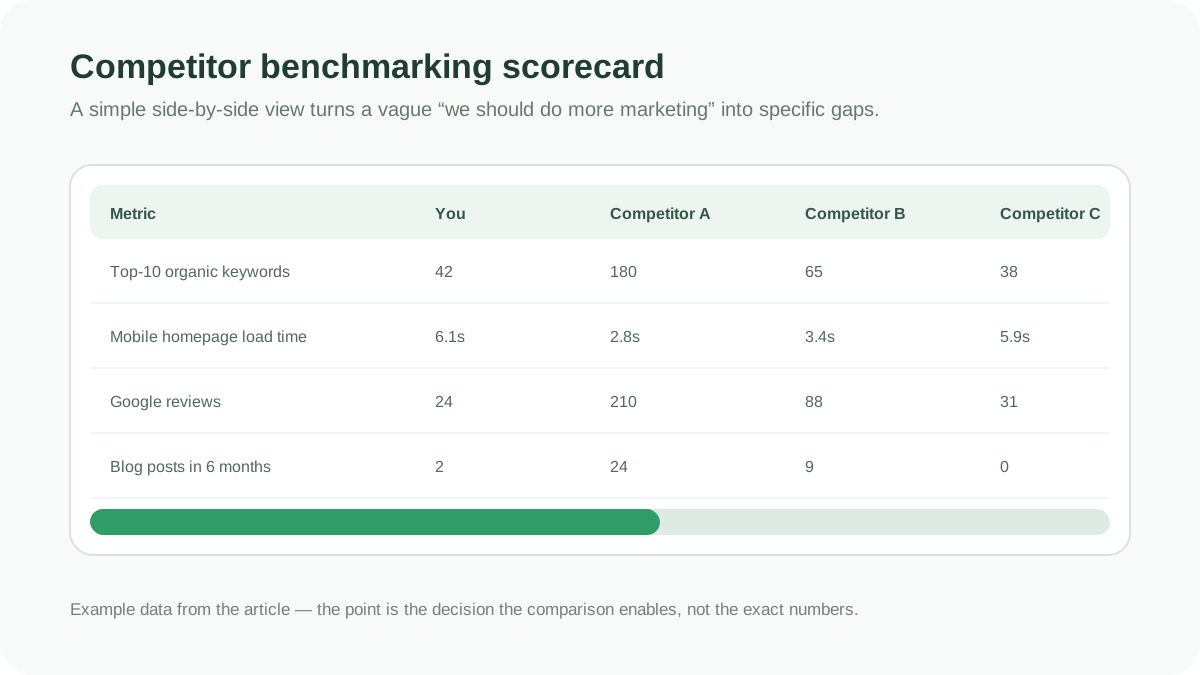
| Metric | You | Competitor A | Competitor B | Competitor C |
|---|---|---|---|---|
| Organic keywords ranking top 10 | 42 | 180 | 65 | 38 |
| Homepage load time (mobile) | 6.1s | 2.8s | 3.4s | 5.9s |
| Google reviews | 24 | 210 | 88 | 31 |
| Blog posts published last 6 months | 2 | 24 | 9 | 0 |
Now the picture is specific rather than vague. You're competitive with Competitor C. Competitor A is meaningfully ahead on every axis, and the review gap is the starkest — 210 versus your 24 is not a small difference, and it directly affects both local search ranking and whether someone chooses to visit you.
That table turns "we should do more marketing" into three actual decisions: fix the site speed, start asking customers for reviews systematically, and publish content consistently rather than twice in six months.
How to Run a Competitor Benchmarking Analysis
The process itself is simple enough that most businesses can do a first pass without hiring anyone.
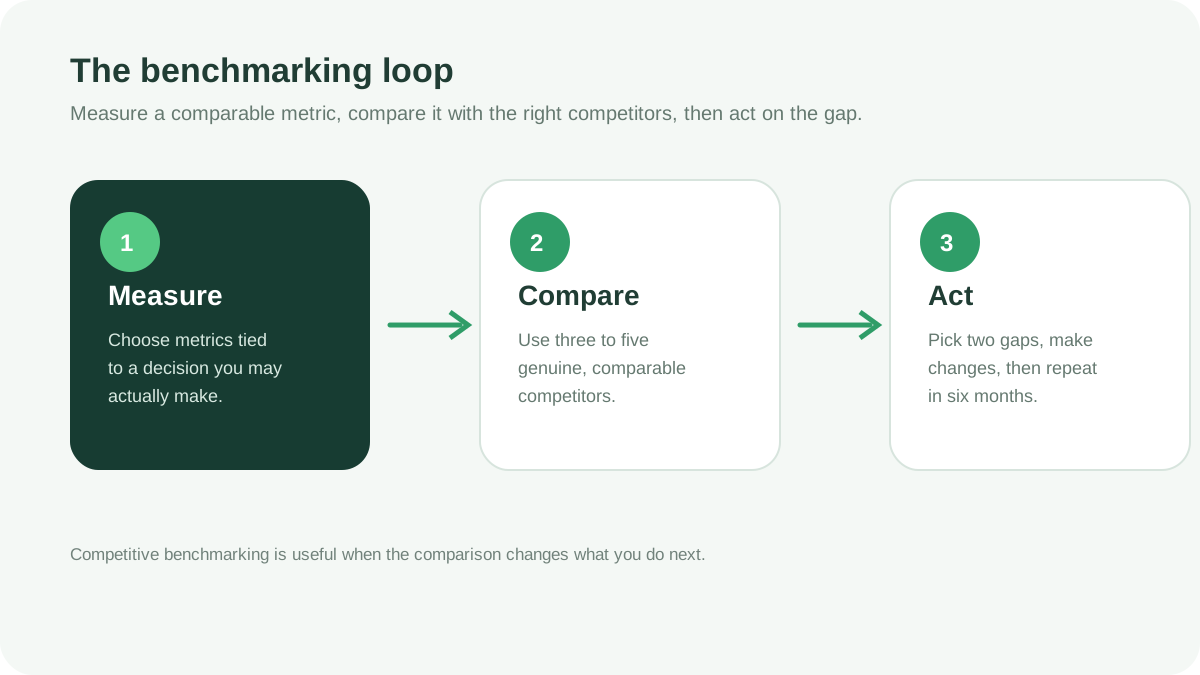
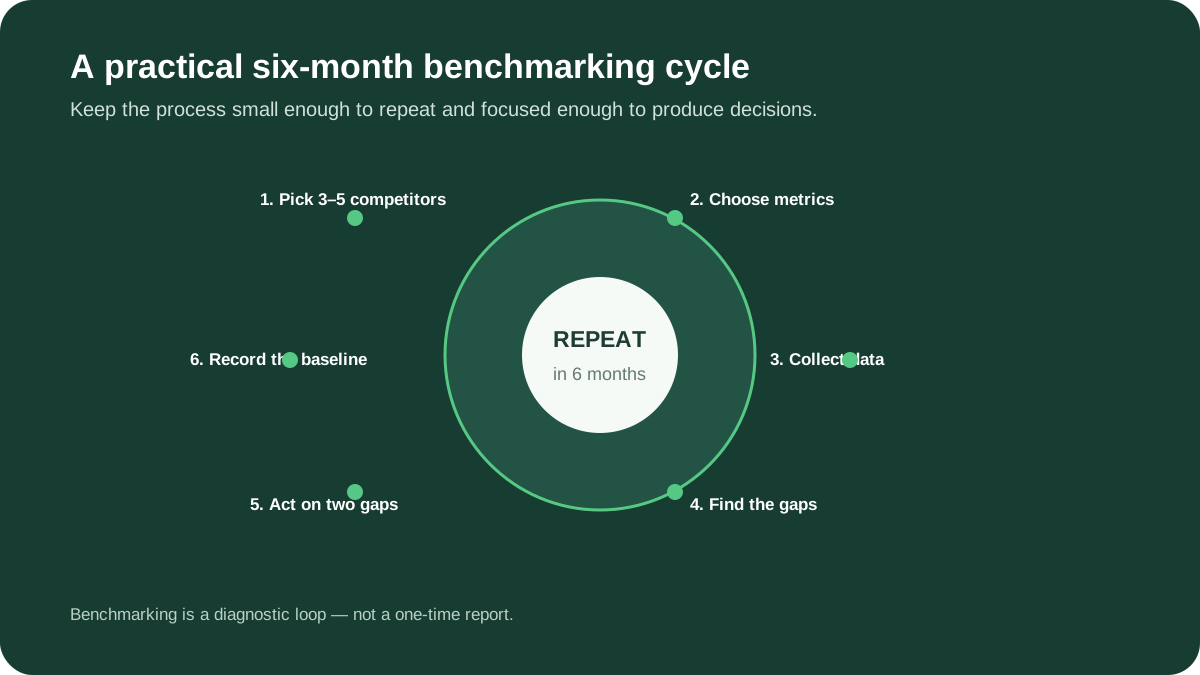
1. Pick three to five real competitors
Real means: similar size, similar customers, similar market. The most common mistake here is benchmarking against a company so much larger that nothing you learn is actionable.
2. Choose metrics tied to a decision
If you won't change anything based on a number, don't collect it. This keeps the exercise from turning into a report nobody reads.
3. Collect the data
Free sources get you surprisingly far — Google Search Console for your own numbers, PageSpeed Insights for load times, Google Business Profile for review counts, and manual checks of their site and social. Paid tools like SEMrush or Ahrefs add keyword and backlink depth if you have access.
4. Put it in one table
A single side-by-side view, like the one above, does more than pages of written analysis.
5. Pick two things to act on
Not ten. A competitor benchmarking analysis that produces a long list of gaps usually produces no change at all, because nothing gets prioritised.
6. Re-run it in six months
A single snapshot tells you where you stand. Repeating it tells you whether you're catching up or falling behind, which is the more useful question.
If you are measuring digital performance, my guide to reading Google Analytics and Search Console without an agency can help you separate useful signals from dashboard noise.
Where Benchmarking Goes Wrong
This is the part I'd want a beginner to read most carefully, because benchmarking has a failure mode that looks like success.
Copying instead of learning
If a competitor posts daily on Instagram, that tells you they post daily. It doesn't tell you it's working, or that it would work for you. You're seeing their activity, not their results — and matching someone else's activity is not a strategy.
Benchmarking outcomes you can't control
It's tempting to compare revenue or market share, but those are downstream of dozens of factors. Comparing capabilities — how fast your site is, how consistently you publish, how systematically you collect reviews — is more useful, because those are things you can actually change.
Treating parity as the goal
Matching your competitors means being equivalent to them. That's a floor, not an ambition. The genuinely useful benchmarking insights are usually the gaps nobody is filling, not the ones everyone has already closed.
There's a real research angle to this last point that goes deeper than a beginner's guide needs — I've written separately about what the academic research actually says about benchmarking KPIs against competitors, including the evidence on when competitor-focused measurement helps and when it backfires.
Is Competitive Benchmarking Worth Doing?
For most small and mid-sized businesses, yes — with the caveat that it's a diagnostic tool, not a strategy. Benchmarking tells you where you stand and where the obvious gaps are. It doesn't tell you what to do about them, and it will never tell you what your competitors haven't thought of yet.
Do it once, act on two things, and repeat it in six months. That's genuinely enough to get most of the value.
If your benchmarking identifies paid-media gaps, you can also compare them with my practical guide to Google Ads optimization. For local businesses, the guide to Google Maps visibility in Ahmedabad covers another useful competitive visibility check.
Frequently Asked Questions
How often should I run a competitive benchmarking analysis?
Twice a year is enough for most businesses. Monthly benchmarking tends to capture normal fluctuation rather than meaningful change, and it takes time away from actually acting on what you found last time.
How many competitors should I benchmark against?
Three to five. Fewer than three and one outlier can distort the picture; more than five can make the exercise heavy enough that it does not get repeated.
What's the difference between competitive benchmarking and competitor analysis?
Competitor analysis is broad and qualitative — understanding positioning, offers, and approach. Benchmarking is narrower and quantitative — comparing specific, measurable metrics side by side.
Can I benchmark without paid SEO tools?
Yes, for a solid first pass. Google Search Console, PageSpeed Insights, Google Business Profile, and manual site checks cover most of what a beginner needs. Paid tools mainly add depth on keywords and backlinks.
How do I benchmark PR results against competitors?
Set up Google Alerts for their brand names, check which publications cover them, and track mentions over a fixed period alongside your own. Look for patterns in which outlets cover your space and who they treat as a credible source — not raw mention counts.
Want to turn competitor gaps into a practical marketing plan?
Use benchmarking to find the gaps first, then decide what deserves your time and budget. You can talk to Hitesh about your marketing plan if you want a second pair of eyes on the numbers.