Google Ads Quality Score Explained (And How to Actually Improve It)
What does Google Ads Quality Score actually measure? A practical guide to Expected CTR, Ad Relevance, Landing Page Experience, and the changes that can genuinely improve account performance.
On this page
Google Ads Quality Score is a 1–10 keyword-level diagnostic. The useful work is improving Expected CTR, Ad Relevance and Landing Page Experience — not chasing the number itself.
Google Ads Quality Score Explained
I'm Hitesh Jaganiya, a digital marketing consultant certified in Google Ads and Google Analytics. Quality Score is one of those Google Ads metrics almost everyone has heard of, but surprisingly few advertisers know how to use properly.
It sits behind a column setting in the Google Ads interface, yet it can tell you where an account has relevance, ad-copy or landing-page problems. This guide explains what Quality Score actually measures, why it matters, and what genuinely moves it.
What Quality Score Actually Is
Quality Score is the 1–10 diagnostic rating Google assigns to each of your keywords, estimating how relevant and useful your ads and landing pages are to someone searching that keyword.
First, it's per keyword, not per campaign or account. You can have a keyword scoring 9 and another scoring 3 in the same ad group.
Second, the number in the interface is a diagnostic tool, not the actual score used in the auction. Google evaluates ad quality in real time for every auction using signals the reported number does not capture, including the exact query, device, location and time of day.
Why Quality Score Affects What You Pay
Google's auction does not simply award the top position to whoever bids most. It uses Ad Rank, which combines your bid with ad quality and other auction factors.
The practical consequence is important: a competitor with better ad quality can win a higher position while paying less per click. Poor quality can mean paying a premium to reach the same people.
Think of it this way
Better relevance → stronger ad quality → potentially more efficient auctions
The Three Quality Score Components
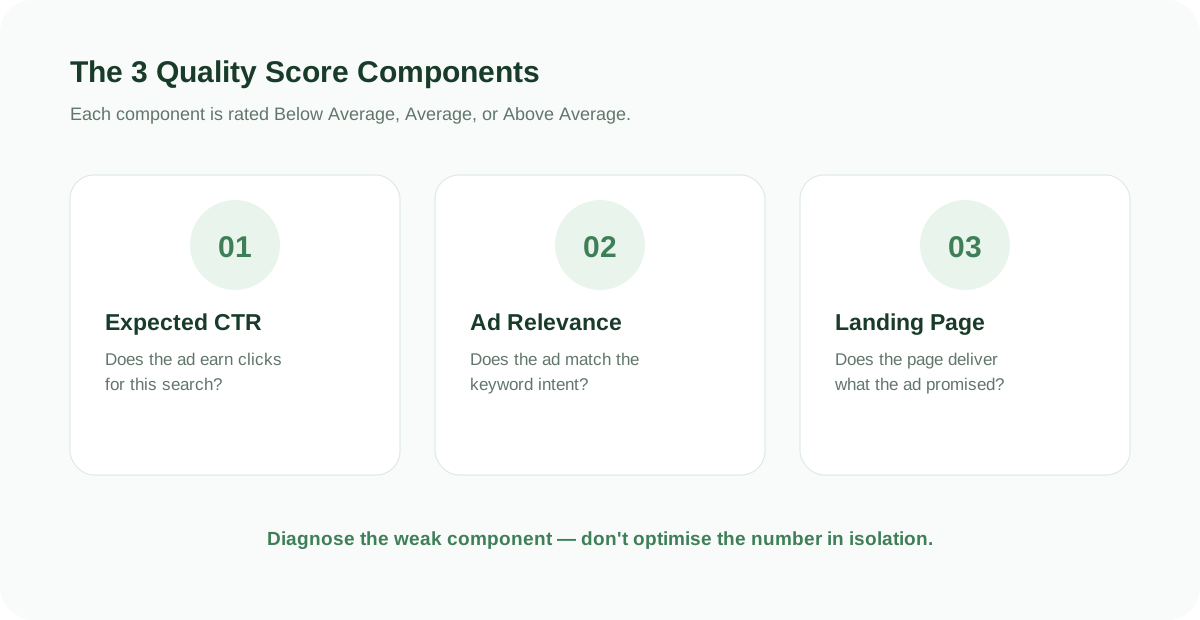
Quality Score is built from three components, each rated Below Average, Average, or Above Average. Add these columns to your keyword view so you can see where the problem actually sits.
Expected Click-Through Rate
Expected CTR estimates how likely someone is to click your ad when it shows for the keyword, relative to other advertisers in the same position. A below-average result often means the ad is too generic for the search.
Ad Relevance
Ad Relevance measures how closely the ad matches the intent behind the keyword. A common structural problem is an ad group holding many loosely related keywords, making genuinely specific ad copy difficult.
Landing Page Experience
Landing Page Experience assesses whether the page delivers what the ad promised, including relevance, navigation, load speed, mobile usability and transparency.
How to Actually Improve Quality Score
Here's the order I'd work through the account.
Tighten ad groups
Create tight thematic clusters where one ad can honestly address every keyword in the group.
Match the ad copy
Reflect the keyword theme in the ad without turning the copy into keyword stuffing.
Test multiple RSAs
Use two or three genuinely different responsive search ads to create comparative data.
Match landing pages
Send each ad group to a relevant service or product page rather than the homepage by default.
Check mobile speed
Run the actual landing page URL through PageSpeed Insights instead of assuming it is fast enough.
Review search terms
Add negative keywords consistently so irrelevant searches do not keep triggering your ads.
If you're auditing a live account, my guide to Google Ads optimization moves goes deeper into search-term mining, negatives, match types, impression share, audiences and landing-page relevance.
What Doesn't Improve Quality Score
Several common tactics change account numbers without fixing the underlying problem.
- Raising your bid can buy position, but it does not improve Quality Score.
- Increasing your budget controls total spend, not quality or per-click cost.
- Pausing low-scoring keywords just to raise the average improves a dashboard number without necessarily improving the account.
- Waiting does not fix a relevance or landing-page problem by itself.
Account audit rule
Don't optimise Quality Score for its own sake. Optimise the inputs that make the customer journey more relevant.
How Long Quality Score Improvements Take
Structural changes such as restructuring ad groups, launching new ads or building new landing pages need time to gather performance data before the score reflects them.
Realistically, expect two to four weeks before numbers move, with longer timelines possible on low-volume keywords where data accumulates slowly.
That matters because checking three days after a restructure and seeing no change is not enough evidence that the work failed.
A Caveat Worth Holding Onto
Quality Score is a diagnostic, not a goal. An account can have a beautiful average while its actual cost per acquisition gets worse if profitable but low-scoring keywords are removed.
The metric that matters is what a customer costs you. Quality Score is useful because improving its underlying signals can improve efficiency, but when the score and business outcome point in different directions, the business outcome deserves attention.
If CPC is the problem you're actually trying to solve, read Why Is My Google Ads Cost Per Click So High? for eight causes worth checking.
Related guide
Want to understand the numbers behind your traffic?
Quality Score tells you about ad relevance. Your analytics and Search Console data tell you what happens after the click.
Read the Google Analytics & Search Console guideFrequently Asked Questions
What is a good Google Ads Quality Score?
7 or above is generally healthy. Anything at 5 or below is worth investigating, since it usually indicates a relevance or landing-page issue that's inflating costs.
Where do I find Quality Score in Google Ads?
In the Keywords view, click Columns and add Quality Score along with Expected CTR, Ad Relevance and Landing Page Experience. None appear by default.
Does Quality Score affect Performance Max or Shopping?
The reported 1–10 Quality Score applies to Search keywords. Ad quality still influences auctions across campaign types, but this specific diagnostic column is not shown for them.
Can a new keyword have a low Quality Score with no data?
New keywords can start with a provisional score based on related signals in the account. The score settles as real performance data accumulates.
Does improving Quality Score guarantee lower costs?
It usually helps reduce cost per click, but competition and other auction factors can still raise costs. Auction Insights is useful alongside Quality Score.
The Bottom Line
Quality Score is useful when you treat it as a diagnostic. Find the weak component, fix the underlying relevance problem, give the account enough time to collect data, and judge the work against cost per acquisition rather than a dashboard number.